
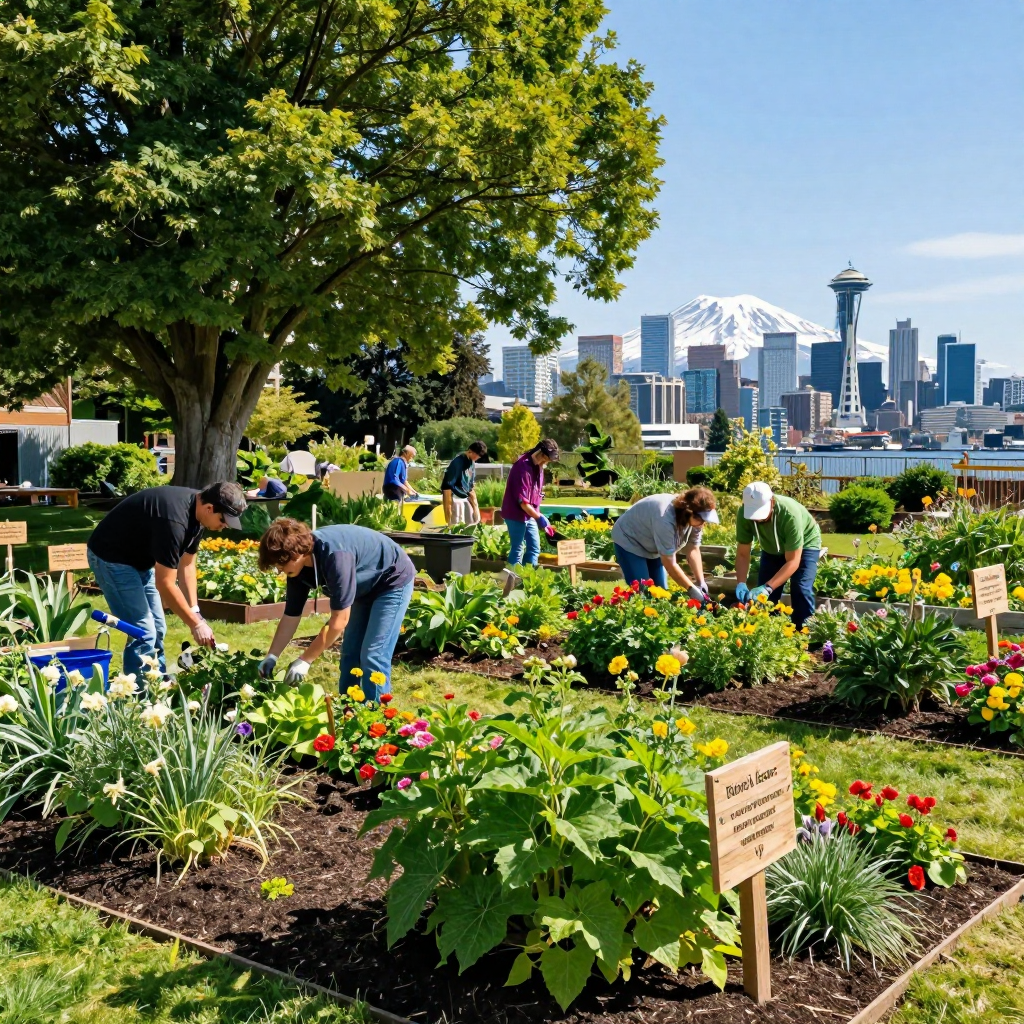
In a city known for its lush greenery and innovative spirit, Seattle's newest community heroes are volunteers who are transforming underutilized urban spaces into vibrant community gardens. These volunteers, many of whom have a deep connection to the cannabis industry as advocates for wellness and sustainability, are spearheading efforts to cultivate not only plants but also a sense of purpose and well-being among neighbors. By partnering with local nonprofits like the Seattle Urban Farm Co. and Garden Hotline, these volunteers are creating sustainable ecosystems that provide fresh produce, educational opportunities, and a shared sense of community pride.
One such project is the "Greenway Initiative," which has converted several vacant lots in South Lake Union into thriving garden spaces where residents can grow their own herbs, vegetables, and even medicinal plants. This initiative, led by passionate volunteers like Jamie Thompson—a former cannabis educator turned community gardener—has attracted a diverse group of participants ranging from novice green thumbs to experienced horticulturists. Thompson explained, 'We wanted to create something that would connect people while also providing access to fresh, organic produce.'
The impact of these gardens extends beyond just growing food; they serve as hubs for education and mentorship. Workshops on sustainable agriculture, composting techniques, and the benefits of herbs and cannabis plants in wellness attract families, seniors, and youth alike. For instance, the Greenway Initiative recently hosted a series of workshops focused on using herbal remedies and essential oils derived from garden-grown plants, highlighting the community's interest in holistic wellness practices.
As Seattle continues to explore the intersection of urban development and sustainability, these community gardens stand as testaments to the power of collective action. They offer a glimpse into how local initiatives can foster resilience and connection within neighborhoods, especially during a time when many are seeking ways to live more sustainably and healthily. Whether it's through sharing knowledge, growing food, or simply enjoying the outdoors, these gardens are cultivating more than just plants—they're building stronger, more connected communities across Seattle.